The #1 PM Interview Mistake That’s Costing You the Job (And How to Fix It)
The Mistake Most PM Candidates Don’t See Coming
You’ve prepared your stories. You know your projects inside and out. But the moment the interviewer asks about a complex project, you dive straight into the details — and somewhere in the middle, you lose them completely. Sound familiar? This single habit is quietly killing more PM interviews than almost anything else, and most candidates never realize it’s happening.
A Real-World Example: The Amazon Interview That Went Sideways
A few years ago, I interviewed at Amazon for a Principal PM position. I’d already cleared the initial round with the hiring manager, and the next conversation was with an engineering manager who wanted to hear about one of my most complex projects.
I launched into it — a workflow that enabled Windows partners to publish artifacts successfully, the business outcomes it drove, the web service architecture underneath it. I went broad, then I went deep. The back and forth stretched to about 30 minutes.
And that’s when I realized: I had completely lost him.
The Real Problem Isn’t Your Story — It’s the Missing Context
When I reflected on what went wrong, it wasn’t the project. The project was genuinely complex and impactful. The problem was that I never gave the interviewer the foundation he needed to understand it.
Without context, interviewers don’t just get confused — they start filling in the blanks themselves. And when that happens, one of two things goes wrong: they either misunderstand your contribution entirely, or they oversimplify your work and minimize what you actually built. Either way, you’re set up to fail — not because your experience isn’t strong, but because the interviewer never got a fair chance to see it.
This is especially common for candidates transitioning into product management, where your past projects may come from engineering, consulting, or operations roles that interviewers aren’t immediately familiar with.
The Lighthouse Strategy: How to Guide Any Interviewer Through Your Experience
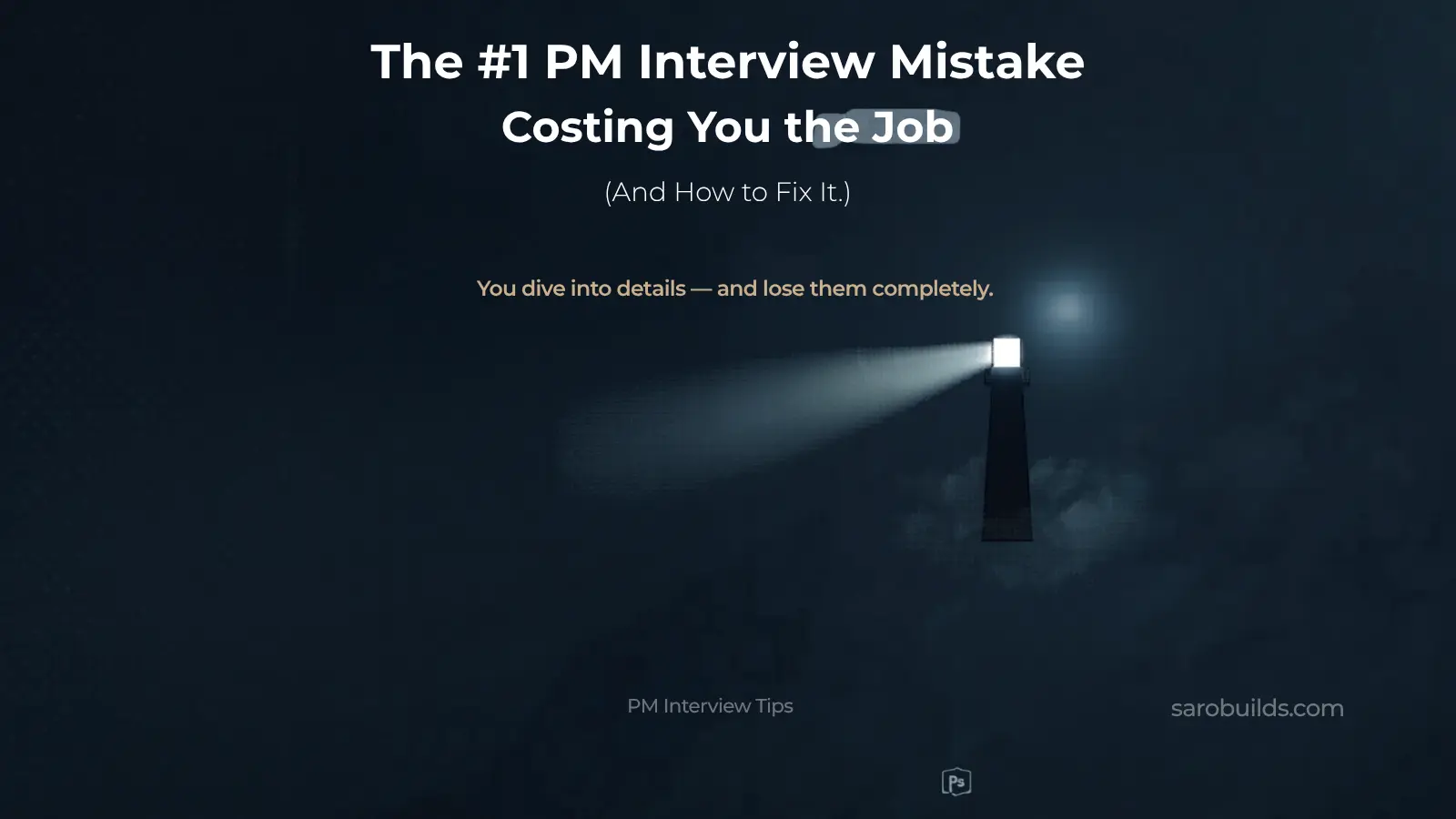
Here’s the framework I share with every candidate I coach: think of yourself as a lighthouse.
A lighthouse doesn’t wait for ships to find their own way. It actively guides them to port — in calm weather and in storms. Your job in a PM interview is exactly the same. You are the lighthouse. The interviewer is the ship. And your experience is the port.
That means you should always assume the hiring manager has zero context about the project you’re describing. Not because they’re not smart — but because they’ve never lived inside your work the way you have. Your job is to build that bridge for them.
In practice, this looks like:
- Start with the “why” — what problem existed before your project, and why did it matter?
- Set the scene — briefly describe the team, the stage of the product, and the constraints you were working within.
- Then walk through your contribution — now that they have the foundation, your impact lands clearly.
When you provide that context upfront, the conversation becomes easier, your answers become more compelling, and your real contributions finally get the credit they deserve.
Stop Assuming They Already Know — Start Guiding Them
The best PM candidates aren’t necessarily the ones with the most impressive projects. They’re the ones who can make any interviewer feel oriented, informed, and genuinely engaged. Context is the difference between an interview that feels like a conversation and one that feels like a deposition.
Next time you prep a project story, ask yourself: would someone who has never heard of this company, this team, or this problem understand what I’m about to say? If not, start earlier.
If you’d like to practice this live, I offer PM mock interview sessions where we work through exactly this — structuring your stories so your experience lands the way it deserves to. Contact me to book a session.