PM Mock Interview Tip: Why Timeline-First Thinking Will Hurt Your Prioritization Answers
The Prioritization Answer That Raised a Red Flag
In a recent mock interview session, a candidate walked me through their approach to prioritization. Their process: look at the timeline first, then figure out which features fit within it, and call that the MVP.
On the surface, it sounds reasonable. Timelines are real. Constraints exist. But something about that answer didn’t sit right — and the more I thought about it, the clearer it became why.
What’s Wrong With Starting With the Timeline?
Timelines aren’t irrelevant. Of course they matter. Shipping late has consequences, and any PM who completely ignores deadlines isn’t living in the real world. But here’s the problem: when you lead with the timeline, you’re letting the calendar make your product decisions for you.
You end up asking “what can we squeeze in by the deadline?” instead of “what actually needs to exist for this product to deliver value?” That’s a fundamentally different question — and it produces fundamentally different outcomes.
A PM who defaults to timeline-first thinking is, in effect, running a feature factory. Work goes in, features come out, and the question of whether any of it moved the needle for the business or the customer gets pushed to the back of the line.
What Should Drive Prioritization Instead?
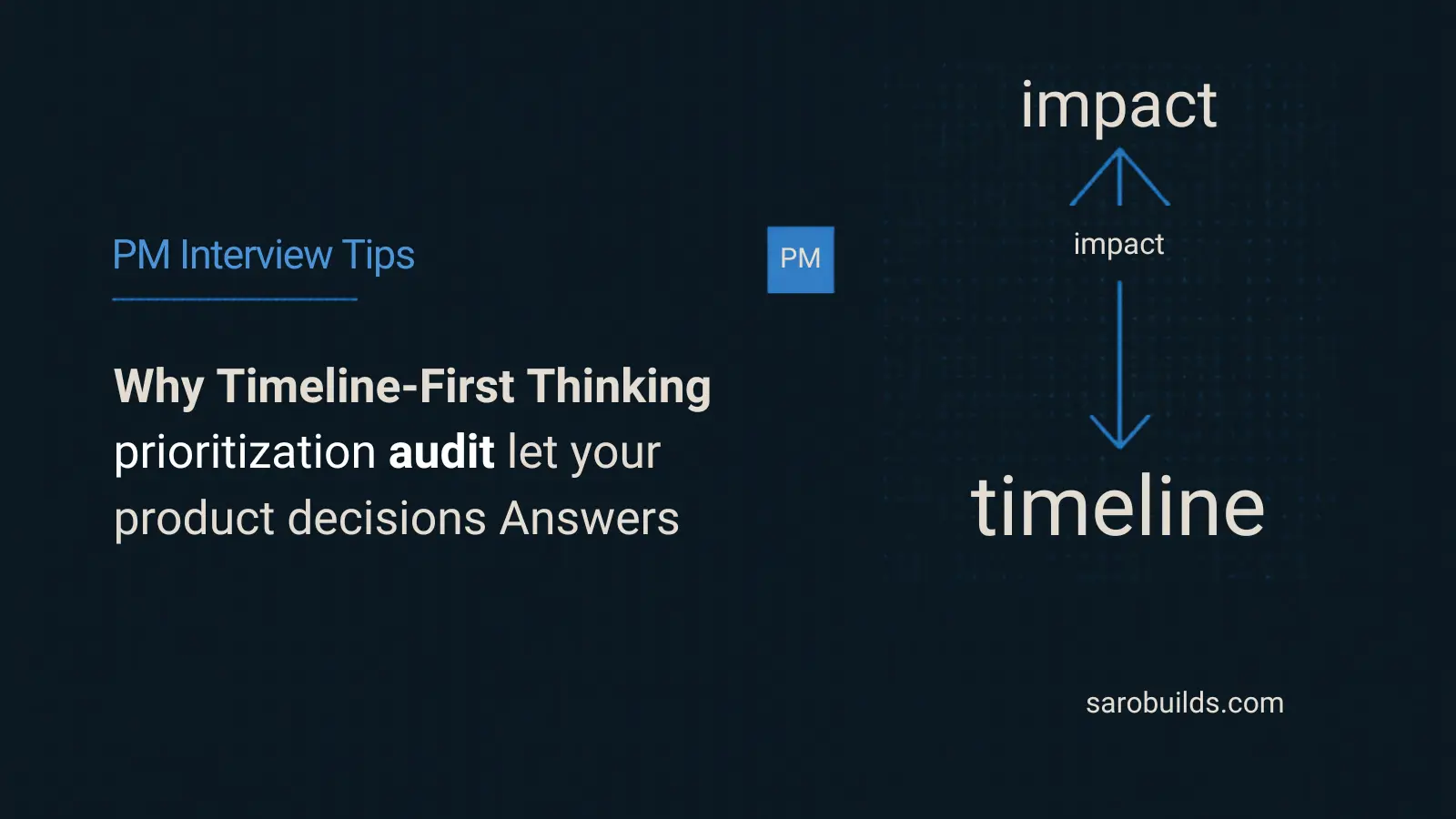
Business impact and customer experience should be at the top of your prioritization hierarchy — not timelines.
Before you think about what fits in the sprint or the quarter, you should be asking: what problem are we actually solving, and for whom? Which of these potential features or initiatives has the highest impact on the outcomes we care about — revenue, retention, activation, or reducing friction for the customer? What does the customer genuinely need, versus what’s just convenient to build?
Once you’ve answered those questions, then you layer in constraints like timeline, engineering effort, and dependencies. The timeline becomes an input to your decision, not the starting point.
The difference sounds subtle, but in an interview it’s night and day. A candidate who leads with impact signals strategic thinking. A candidate who leads with timeline signals execution mode — and execution mode is not what a PM role is evaluated on.
How to Frame This in Your Next PM Interview
If a prioritization question comes up in your interview, structure your answer around value first. Something like: “I’d start by identifying which initiatives have the highest potential impact on our core business metric and the most direct benefit to the customer. Then I’d evaluate effort, dependencies, and timeline to sequence them.”
That framing shows you understand what prioritization is actually for — it’s not about filling a sprint. It’s about making deliberate choices that move the product and the business forward.
Timelines have a seat at the table. They just shouldn’t be sitting at the head of it.
What Do You Think?
This is genuinely a topic worth debating — product development is full of real-world tradeoffs, and I’d love to hear how you approach it. Do you lead with impact, or do timelines play a bigger role in how you prioritize?
If you want to pressure-test your prioritization thinking in a live mock interview, send me a message. Real feedback, real scenarios, and answers that will actually hold up when it counts.